
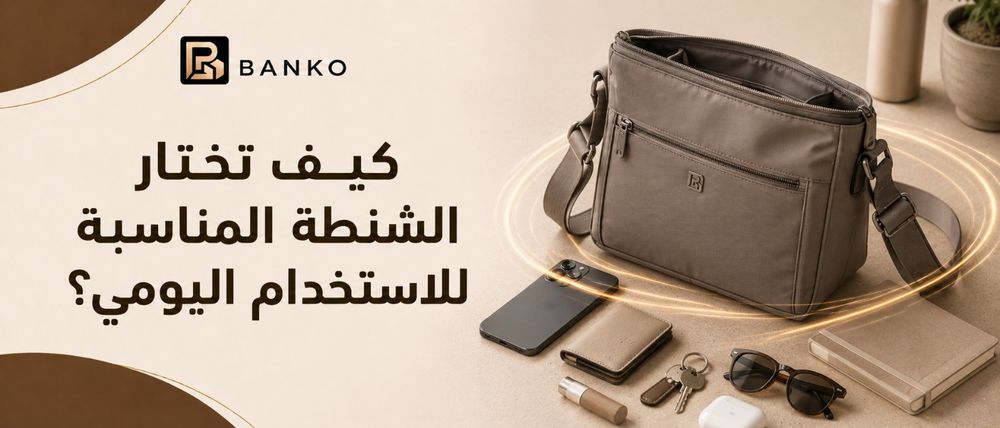
How to Choose the Right Everyday Bag: A Practical Guide
Choosing the right everyday bag is not simply about finding a design you like. The best choice depends on what you carry, how often you use it, how you move throughout the day, and how much space you actually need.
A bag that works perfectly for someone carrying only a phone, wallet, and keys may not be practical for someone who carries a tablet, documents, chargers, or other daily essentials.
With so many options available—from crossbody bags and shoulder bags to backpacks and tote bags—the most useful question is not Which bag looks best? but:
Which bag fits my everyday needs while remaining comfortable, practical, and easy to use?
This guide will help you understand what to look for when choosing an everyday bag, from size and carrying style to organization, material, and overall design.
How Do You Choose the Right Everyday Bag?
The best way to choose an everyday bag is to start with your actual routine, rather than the appearance of the bag.
Before making a decision, consider:
- What do I normally carry with me?
- Do I only need space for my phone, wallet, and keys?
- Do I carry a tablet or laptop?
- Do I walk or commute for long periods?
- Do I need to keep both hands free?
- Will I use the bag for work, university, shopping, or everyday outings?
- Do I need multiple compartments to keep my belongings organized?
Once you understand your everyday needs, choosing the right bag type and size becomes much easier.
What Bag Size Is Right for You?
The right size is not necessarily the largest bag you can find. It is the size that comfortably holds what you actually need without adding unnecessary bulk or weight.
If You Carry Only the Essentials
If your daily belongings are limited to your phone, wallet, keys, and a few small personal items, a small crossbody bag or compact everyday bag may be enough.
A smaller bag can be lightweight and easy to carry, while also helping you avoid carrying unnecessary items simply because there is extra space.
If You Carry a Moderate Amount
If you usually carry sunglasses, a charger, a wallet, a notebook, or other personal items, a medium-sized bag with useful internal organization may be a better choice.
In this case, the internal layout can be just as important as the overall size.
If You Carry More Throughout the Day
If you regularly carry a tablet, laptop, documents, or several accessories, look for a larger bag designed to accommodate them.
However, do not rely only on descriptions such as "large" or "spacious." Whenever possible, check the actual dimensions and product specifications.
Size labels are not standardized, so a "medium" bag from one brand may be significantly different from another.
Which Type of Bag Is Best for Everyday Use?
There is no single bag style that works for everyone. Each type offers a different carrying experience and is better suited to certain routines.
Crossbody Bags
A crossbody bag is worn diagonally across the body and can make it easier to keep your hands free while moving.
It can be a practical choice for everyday outings and commuting, especially when easy access to your belongings is important.
When choosing one, consider the strap length, adjustability, bag size, and closure system.
Shoulder Bags
Shoulder bags are carried over one shoulder and can provide more room than many compact everyday bags.
They can work well for work, university, shopping, or everyday use depending on their size and design.
Do not judge a shoulder bag by its appearance alone. Check the internal capacity, compartments, and strap comfort as well.
Backpacks
If you carry several items or spend a lot of time walking or commuting, a backpack can be a practical option because the weight is distributed across both shoulders.
Backpacks can be particularly useful when you need more space while keeping your hands free.
Tote Bags
Tote bags are typically known for their open, spacious design and easy access to their contents.
They can be useful for people who carry several items throughout the day.
However, if you walk frequently or prioritize stability and secure carrying, the way the bag sits on your body may be more important than its capacity alone.
What Makes an Everyday Bag Truly Practical?
"Practical" means something different to every person, so it is better to evaluate a bag based on your own routine rather than relying on marketing descriptions.
Look for features that actually support the way you use the bag.
1. Appropriate Capacity
The bag should comfortably hold your essential belongings without becoming unnecessarily bulky.
2. Useful Internal Organization
Having many pockets does not automatically make a bag more organized.
What matters is whether the compartments help you separate and quickly access the things you carry.
3. A Suitable Closure
Zippers and secure closure systems can be useful when carrying personal belongings, particularly if you move around frequently.
4. A Comfortable Strap
If you carry the bag for several hours, strap comfort and weight distribution become especially important.
5. A Reasonable Weight
Remember that the weight of the bag itself is added to the weight of everything inside it.
A large bag may not be the right choice if you rarely need its full capacity.
Does the Material Matter When Choosing a Bag?
Yes, but there is no single material that is best for every situation.
The right choice depends on how you use the bag, the look you prefer, and how much maintenance you are willing to provide.
Leather and Faux Leather
These materials can work well for people who prefer a polished or more refined appearance, particularly for work and everyday outfits.
Always check the care instructions provided with the specific product.
Fabric
Fabric bags can be a practical option for everyday use when light weight and flexibility are priorities.
Durability and ease of cleaning vary depending on the specific fabric and construction.
Water-Resistant Materials
If you expect the bag to be exposed to moisture, check the product specifications rather than assuming that a particular material is waterproof or water-resistant.
Do not assume water resistance simply because a bag looks durable.
How Do You Choose an Everyday Bag Color?
If you plan to use the same bag frequently, consider the colors and styles you already wear.
Neutral shades such as black, beige, and brown can be easy to coordinate with a wide range of outfits, while bolder colors and distinctive designs can add more character to a look.
The most practical choice is usually the color that works naturally with your existing wardrobe and everyday style, rather than a color chosen only because it is currently trending.
How to Choose a Bag Based on Your Daily Routine
Instead of memorizing different bag types, think about how you spend your day.
For Quick Everyday Outings
Choose a small or medium-sized bag that comfortably holds your essentials and provides easy access.
For Work or University
Prioritize capacity and organization. If you carry a laptop, tablet, or documents, make sure the bag can accommodate them properly.
For Commuting and Walking
Comfort, stability, and weight distribution become more important.
A crossbody bag or backpack may be suitable depending on how much you carry and how you move.
For Versatile Everyday Use
Look for a practical medium-sized design that can work across different situations rather than choosing a highly specialized bag for a single purpose.
What Should You Carry in Your Everyday Bag?
There is no universal checklist that everyone needs to follow.
Start with the items you genuinely use, such as:
- Phone
- Wallet and cards
- Keys
- Sunglasses
- Charger or cable when needed
- Small personal essentials
- Notebook or tablet if required
The goal is not to fill your bag. It is to choose a bag size that matches what you actually carry.
If you constantly add things simply because there is extra space, the bag may be larger than you really need.
How Do You Choose a Bag If You Carry Electronics?
This deserves special attention.
If you carry a laptop or tablet, do not rely only on a product description that says the bag "fits a laptop."
Check:
- The bag's external dimensions
- The dimensions of the device compartment
- How the compartment closes
- Whether additional protection is provided
- The bag's overall weight
- The comfort of the carrying method
The actual dimensions of the compartment are more important than a general product label.
Common Mistakes When Choosing an Everyday Bag
Choosing a Bag Based Only on Appearance
A bag can look excellent in photos but still fail to meet your everyday needs.
Better approach: Start with function, then consider design.
Choosing a Bag That Is Too Large
Extra space can encourage you to carry items you do not really need.
Better approach: List the things you normally carry before choosing the size.
Ignoring the Carrying Method
A bag can have the right capacity but still become uncomfortable after several hours.
Better approach: Think about how long you normally carry it and how you move during the day.
Assuming More Pockets Means Better Organization
A large number of pockets does not necessarily mean better organization.
Better approach: Look for compartments that make sense for your belongings.
Ignoring Product Specifications
Photos alone cannot tell you everything about a bag's dimensions, material, or capacity.
Better approach: Read the product description and specifications before making your decision.
How Do You Choose One Bag for Most Everyday Situations?
If you want one everyday bag that can work across different situations, look for a balance between:
Size + Comfort + Organization + Design + Versatility
A practical medium-sized design can often be more versatile than a bag designed for a very specific purpose.
However, do not let the idea of having "one bag for everything" push you toward a bag that is unnecessarily large or heavy.
If you carry very little, choose a smaller design.
If you carry electronics or several daily essentials, prioritize capacity, organization, and comfort.
How to Choose the Right Everyday Bag in 6 Simple Steps
You can simplify the entire process into six steps:
1. Identify Your Main Use
Is it for work, university, commuting, shopping, or general everyday use?
2. List What You Normally Carry
Think about your actual belongings rather than what you might carry.
3. Choose the Appropriate Size
Do not automatically choose the largest option.
4. Select the Right Carrying Style
Shoulder, crossbody, backpack, or hand-carrying—the best option depends on your routine.
5. Check the Material, Organization, and Closure
These details become increasingly important when you plan to use the bag regularly.
6. Compare the Design, Price, and Specifications
Do not let appearance or price alone determine your decision.
Explore Everyday Bags at BANKO
Once you understand what you need from your everyday bag, you can explore the bag collection at BANKO and compare the available options based on style, design, size, and specifications.
BANKO offers a variety of bag styles, including shoulder bags, crossbody bags, backpacks, tote bags, and travel bags, giving you different options for different everyday needs.
Suggested CTA button:
Explore BANKO's Bag Collection
Final Thoughts
Choosing the right everyday bag is not simply about appearance.
The best decision starts with your lifestyle and the things you actually carry, then moves to size, carrying style, organization, material, and design.
There is no single bag that is perfect for everyone. The right everyday bag is the one that fits your real needs without unnecessary size or weight while complementing your personal style.
Start with your routine, understand what you need to carry, compare the available options, and choose the bag that makes everyday life easier.